

Synopsis
In 1976, the U.S. Army Corps of Engineers (USACE) refused to approve a major dredge-and-fill project proposed by the Deltona Corporation on Marco Island, Florida. The decision followed an Environmental Impact Statement that warned the development could cause severe damage to the island’s mangrove wetlands and coastal environment.
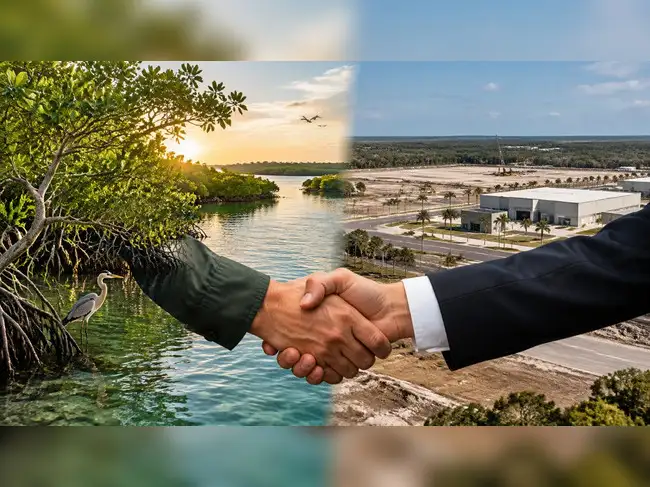
A major change in U.S. environmental regulation played out on the southwest Florida coast in the 1970s, when the U.S. Army Corps of Engineers (USACE) confronted a large development proposal on Marco Island. What began as a dispute over dredging, filling and residential construction ultimately became a significant test of the federal government's willingness to protect wetlands from large-scale development.
The roots of USACE's regulatory authority went back to the Rivers and Harbors Act of 1899, which enabled the Corps to address pollution when it threatened navigation on the nation's waterways. The agency's responsibilities broadened significantly after Congress enacted the Federal Water Pollution Control Act Amendments of 1972, widely called the Clean Water Act. Under the new framework, ecological considerations became part of the regulatory process, including in wetlands and waterways where nav.
The change arrived as environmental concerns were becoming increasingly influential in federal policy. It also raised a fundamental question about USACE: would an agency with a long history of supporting navigation and development actually use its new authority to reject a significant project because of environmental damage? The answer emerged on Marco Island.
